
There’s something different about returning to a place designed to feel like somewhere else. Universal Studios Hollywood isn’t just a theme park — it’s a collection of worlds layered inside one another, each asking you to step out of your own for a while. I’ve also wanted to test out the Kodak Charmera somewhere besides the usual trips to the market and playgrounds. This is perfect because of the movie-set style backgrounds.
I brought the Charmera along for the day, knowing it wouldn’t capture these worlds the way a modern camera might. In places like the Wizarding World and Super Nintendo World—where everything is designed to be vivid and immersive—the Charmera softens the edges. Bright colors bloom slightly, highlights wash gently over details, and motion isn’t always perfectly frozen. But that imperfection feels honest. The images don’t try to recreate the spectacle of the park; they reflect what it felt like to move through it. A glance at a storefront, a moment of laughter, a quick pause between attractions—these are the things it holds onto. Instead of documenting everything, it offers fragments. And in a place built on imagination, those fragments somehow feel closer to memory than anything perfectly sharp ever could.
Visiting with family changes how you move through it. You’re not there to see everything. You’re there to experience enough — together.
There’s always a balance to be found between capturing a moment and fully living it. It’s easy to stay behind the camera, to keep reaching for one more shot, one more angle, one more attempt to preserve everything. But some of the most meaningful parts of the day happen when the camera is put away. A shared glance, a laugh that doesn’t repeat, a quiet pause between places — these aren’t things you frame, they’re things you feel. Being there with family, present and unhurried, often matters more than documenting every detail. The photos help us remember, but the moments themselves are what stay with us.
This trip naturally centered around two places: the Wizarding World of Harry Potter and Super Nintendo World. Two very different environments, yet both built around the same idea — immersion. Not just looking at something, but stepping into it.
Entering the Wizarding World
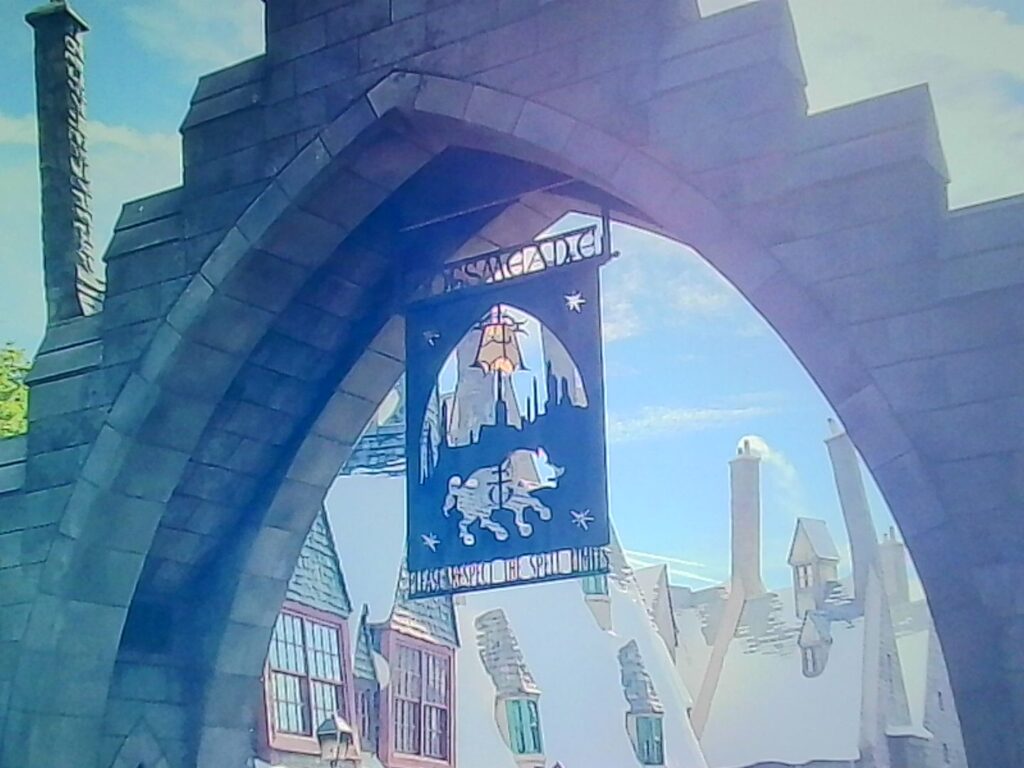
Walking into the Wizarding World of Harry Potter feels like crossing a threshold. The architecture closes in slightly. The path curves. The sound shifts. And suddenly, you’re no longer in Southern California — at least not in the way your mind usually understands it.
Hogsmeade sits quietly beneath the looming silhouette of Hogwarts Castle. Snow rests permanently on rooftops, frozen in a kind of seasonal suspension. The details are everywhere, but they don’t call attention to themselves. They exist to be discovered.
What stood out most wasn’t any single attraction, but the atmosphere. The feeling of stepping into a place that had once only existed in books and films, now given physical form. Watching family members take it in — noticing familiar shapes, recognizing names, pointing things out to one another — made it feel less like a visit and more like a shared memory unfolding in real time.
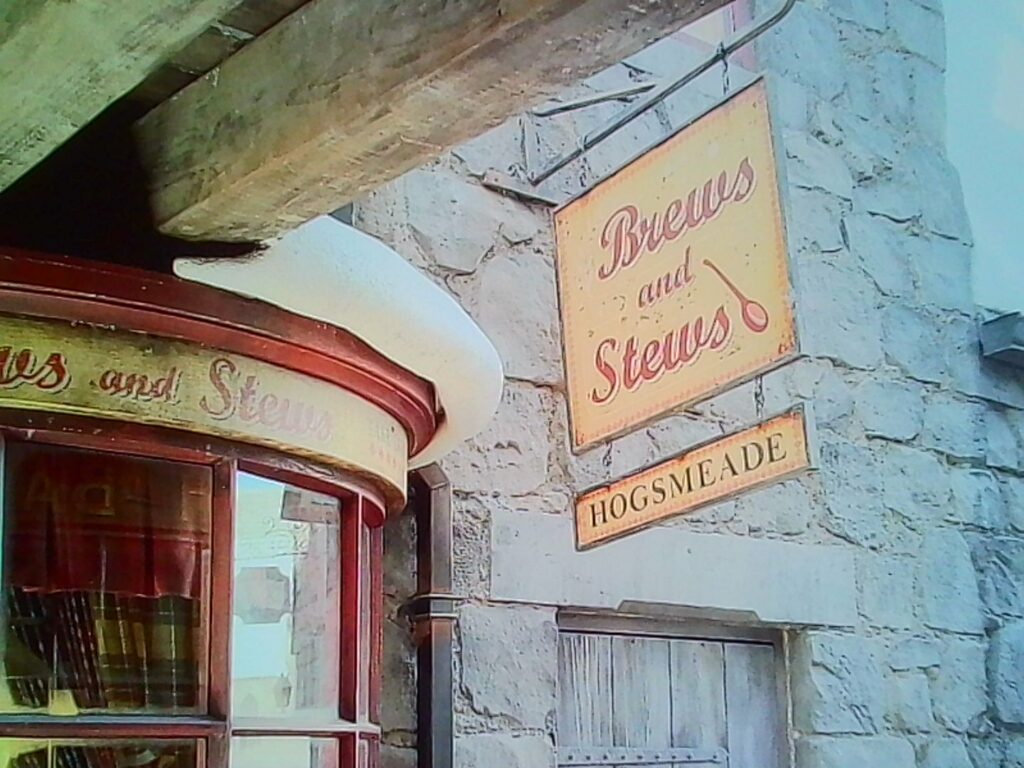
Familiar Stories, Shared Again
The Wizarding World carries a certain weight because it’s built on stories many of us grew up with. There’s a quiet recognition that happens when you see something familiar rendered physically. It bridges time — connecting who you were when you first encountered those stories to who you are now.
For a child, it’s discovery. For an adult, it’s reflection. And when those happen side by side, something deeper forms.
You don’t need to rush through it. In fact, it’s better if you don’t. Slowing down allows the space to breathe. Conversations stretch out. Small details come into focus. The experience becomes less about seeing everything and more about feeling where you are.
Moving Between Worlds
Leaving the Wizarding World and moving through the park toward Super Nintendo World feels like shifting gears entirely. The environment opens, then narrows again. The colors change. The tone lifts.
If Harry Potter is quiet, textured, and grounded in atmosphere, Super Nintendo World is kinetic, bright, and playful. It’s built around motion and interaction, where everything feels slightly elevated — colors, sounds, energy.
And yet, the transition between the two doesn’t feel jarring. It feels like moving between chapters.
Stepping Into a Game
Super Nintendo World is less about observing and more about participating. Platforms move. Coins spin. Sounds echo from directions you don’t expect. It feels like stepping inside something that was once flat and pixel-based, now expanded into physical space.
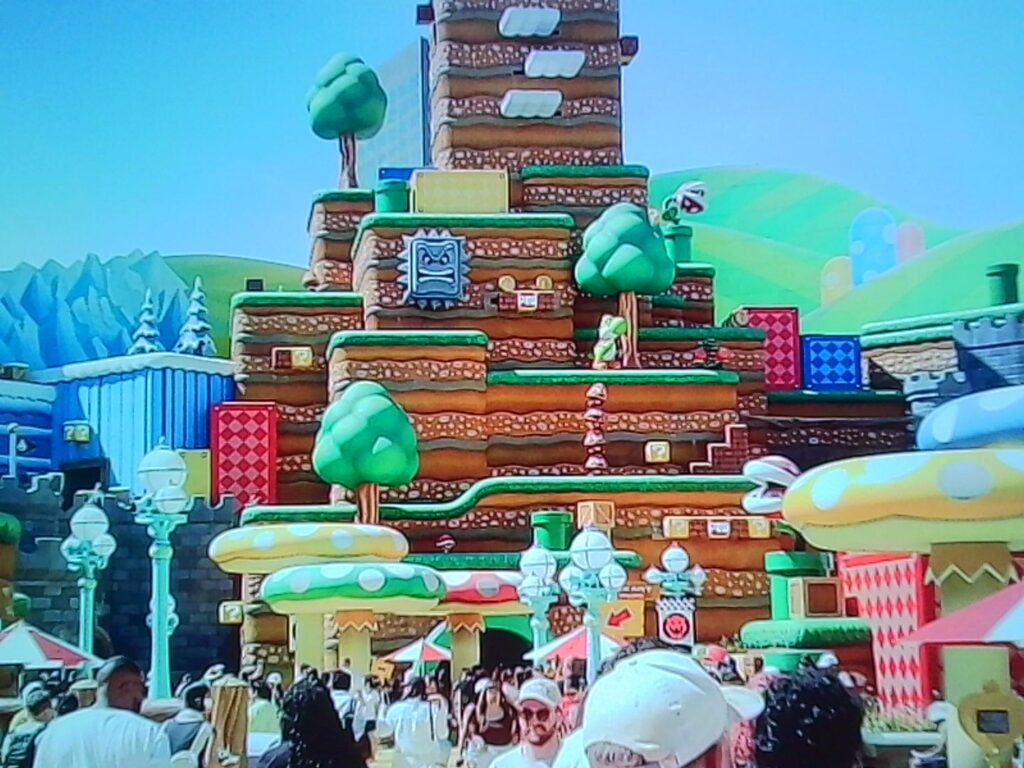
What stood out wasn’t just the design, but the reaction it created. Watching family engage with the environment — noticing details, pointing things out, moving through the space with curiosity — brought out a different kind of joy. It wasn’t reflective in the same way as the Wizarding World. It was immediate.
There’s a kind of shared energy that builds when everyone is interacting with the same environment at once. It doesn’t require explanation. It just happens.
Layers of Experience
What makes a place like Universal Studios meaningful isn’t the scale of what’s built, but how it’s experienced. You can walk through both lands quickly and leave with impressions. Or you can slow down, notice how people respond, and let those reactions shape the day.
With family, the latter feels more natural.
You begin to notice the rhythm of the day — when energy rises, when it settles, when a quiet moment between attractions becomes more memorable than the attraction itself. Sitting down for a break, sharing food, talking about what stood out — these are the moments that anchor the experience.
Presence in Designed Spaces
Theme parks are carefully constructed environments, but presence still matters within them. It’s easy to get pulled into lines, schedules, and the idea of maximizing time. But stepping back, even briefly, changes the experience.
Standing still in Hogsmeade and watching people pass. Pausing in Super Nintendo World and listening to the layered sounds. Letting the environment exist without immediately moving through it — those moments create space for memory to settle.
Even in a place designed for movement, stillness has value.
The Day as a Whole
By the time the day begins to wind down, the individual pieces start to blur together — not in a negative way, but in a cohesive one. The worlds, the transitions, the conversations, the shared reactions — they merge into something that feels complete.
What remains isn’t a checklist of rides or attractions. It’s the feeling of having spent time together inside a series of shared environments, each offering a different perspective, a different pace, a different kind of engagement.
Carrying It Forward
Driving away from the park, there’s a quiet shift back into everyday life. The layers fall away. The world returns to its usual form. But something lingers.
Maybe it’s the memory of walking through familiar stories. Maybe it’s the brightness of a space that invited play without hesitation. Maybe it’s simply the time spent together, moving through different worlds without needing to rush.
Places like this aren’t meant to replace reality. They’re meant to reflect something about it — how we engage, how we connect, how we experience things together.
Worlds, Shared
In the end, the value of the day wasn’t in how much we saw, but in how we moved through it as a family. The Wizarding World and Super Nintendo World offered different kinds of immersion, but both created opportunities to share something meaningful.
Not because they were spectacular, but because we were there together.
And that’s what stays.