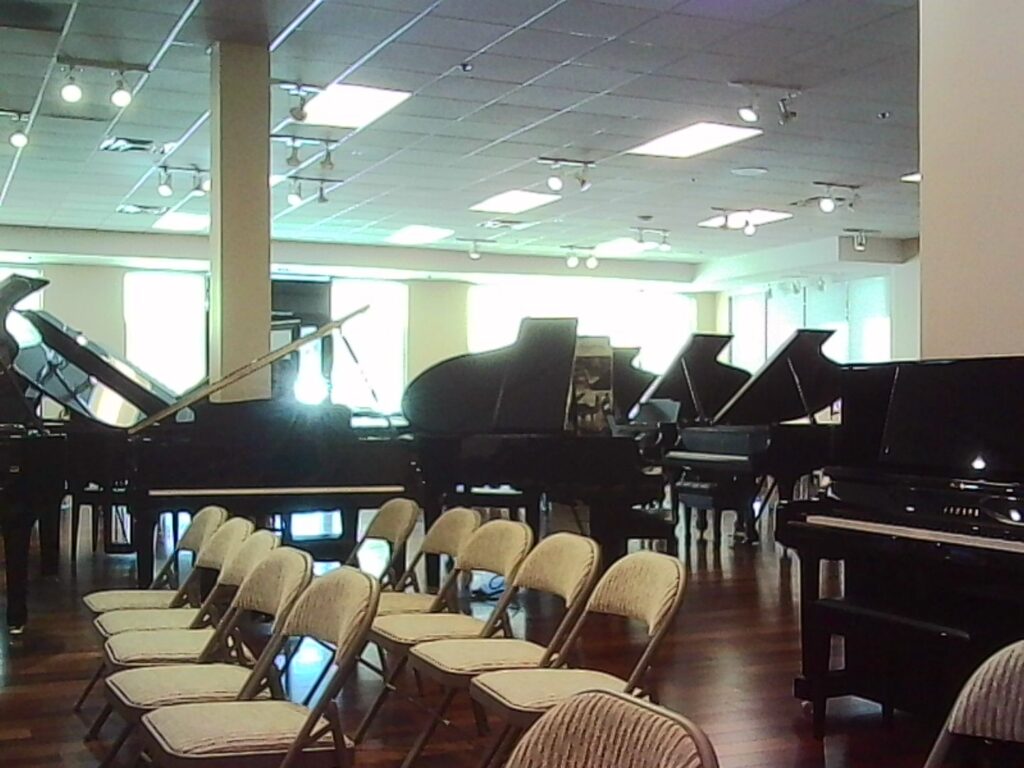
Music was never background noise for me.
It was structure. It was timing. It was a way of understanding emotion before I had words for it.
My parents put me through piano lessons but shortly stopped when school took too much of my time. Also, I started losing my hearing when I was nine years old. At first, it wasn’t dramatic or obvious — just small absences. Certain tones faded. Certain details blurred. Music didn’t disappear all at once. It slowly stepped back, like someone leaving a room without saying goodbye.
By the end of my thirties, I could no longer hear music in a way that made sense. Not melodies. Not harmony. Not the full shape of a song. But music had already done its work by then. It had already embedded itself into how I remember, how I calm myself, how I move through difficult and ordinary days.
Even now, music is still with me — just not through my ears.
Piano as a Place, Not a Sound
The piano was never just an instrument to me.
It was a physical presence.
The weight of the keys.
The resistance under my fingers.
The way posture mattered.
Even before my hearing changed significantly, piano music felt spatial. You sat inside it. You didn’t just listen — you occupied it. That mattered later, when sound became unreliable.
I don’t remember specific pieces as clearly as I remember how it felt to play them. The repetition. The patience. The way mistakes forced you to slow down and start again. Piano taught me something that photography would teach me later: limitation creates attention.
When sound faded, the memory of touch remained.
Music as Memory Storage
I can’t hear music now, but I still know it.
Certain songs still arrive fully formed in my head during quiet moments — not as sound, but as structure. I know where a chorus lifts. I know when a bridge changes the emotional direction of a song. I remember the tension before resolution, even if I can’t hear the resolution itself.
Music became a memory container, not a sensory one.
It carries:
- Late nights and early mornings
- Long drives where songs repeated until they felt stitched into the road
- Periods of grief where music said what I couldn’t
- Moments of boredom that became tolerable because rhythm existed
Those memories don’t require sound anymore. They’re already archived.
When Music Stops Being External
Losing music wasn’t a clean break. It was gradual, and that made it harder to name.
There was no single moment where I said, this is the last song I’ll hear. Instead, there were moments of confusion. Songs sounding wrong. Familiar pieces feeling incomplete. Eventually, silence replaced frustration.
What surprised me most was that music didn’t leave my emotional life.
During hard times, I still reach for it — just internally. During good times, certain memories still hum in the background. Even during boring stretches of life, music fills the space where impatience might otherwise live.
It’s not nostalgia. It’s continuity.
Charmera Without Sound
Charmera, to me, has always been about what remains.
A camera that doesn’t overwhelm you.
A process that doesn’t demand perfection.
A tool that lets memory exist without constant verification.
Music works the same way now. I don’t need to hear it to know it shaped me. Just like a photograph doesn’t need to be sharp to be meaningful, music doesn’t need to be audible to be present.
What matters is that it was there when it counted.
Carrying Music Forward
I don’t try to recreate music anymore.
I don’t chase devices or solutions or substitutes.
Instead, I let music live where it naturally settled: inside memory, muscle, and emotion. It shows up when I need steadiness. When I need grounding. When I need to remember who I was at different stages of my life.
Music didn’t disappear.
It just stopped needing sound.
And in that way, it became permanent.