
How Smart Families Are Using Costco and Bulk Buying to Stay Ahead of Inflation and Uncertainty
Rising global tensions and ongoing conflicts often show up in everyday life in a quieter—but very real—way: higher grocery bills, more expensive gas, and steadily increasing household costs. For middle-class families, the challenge isn’t preparing for shortages—it’s preparing for price pressure over time.
One of the most practical, proven ways to stay ahead?
Strategic bulk buying—especially through stores like Costco.
This isn’t about panic buying. It’s about building a cost buffer that protects your household budget for the next 6–12 months.
Why bulk buy?
Bulk buying at warehouse stores like Costco and Sam’s Club comes with some surprisingly interesting advantages that go beyond just grabbing bigger packages. For starters, most warehouse clubs actually make the majority of their profits from membership fees rather than product markups. That means many of the items you buy are priced very close to cost, which is why the savings can feel so significant. In fact, buying in bulk can often reduce the price per unit by 20–50% compared to traditional grocery stores, essentially giving families a built-in discount on everyday essentials.
Another hidden benefit is how bulk buying changes your overall spending habits. When your pantry and freezer are well stocked, you’re less likely to make frequent grocery trips, which cuts down on gas costs, impulse purchases, and last-minute takeout spending. Over time, those behavioral shifts can add up to just as much savings as the lower prices themselves. Even something as simple as reducing shopping trips can quietly keep more money in your pocket each month.
A chest freezer can amplify these savings even further. By buying meat and frozen goods in bulk when prices are low, families can save hundreds of dollars annually. Many people find that a small freezer can pay for itself within a year, especially when meat prices fluctuate by one to three dollars per pound. Despite what some might assume, freezers are also relatively inexpensive to run, typically costing only about $30 to $60 per year in electricity—often less than a single grocery trip or tank of gas.
Bulk buying also pairs well with foods that have exceptionally long shelf lives. Staples like white rice, dry beans, and honey can last for years—sometimes even decades—when stored properly. This makes them not only cost-effective but also a form of long-term food security. Meanwhile, canned goods tend to experience slower price increases compared to fresh or perishable items, making them a smart choice for building a buffer against gradual inflation.
Warehouse clubs also simplify the shopping experience in ways many people don’t realize. Costco, for example, carries only a fraction of the items found in a typical grocery store—around 4,000 compared to as many as 40,000. This limited selection allows them to negotiate better pricing and reduces decision fatigue for shoppers. At the same time, their “treasure hunt” approach with rotating items can create excitement, though the real savings are usually found in consistent staples rather than impulse buys.
It’s also worth noting that not everything is cheaper in bulk. Some snacks or branded items can actually cost more than sale prices at regular stores, which is why checking the unit price—the cost per ounce or per item—is key. Smart bulk shoppers focus on categories where savings are consistent, such as pantry staples, household goods, and proteins.
Finally, one of the less obvious factors influencing grocery prices is energy. When oil and fuel costs rise, it affects everything from food transportation to packaging and storage. This leads to gradual price increases across the board. Bulk buying helps families stay ahead of these changes by locking in today’s prices before those increases fully ripple through the system.
In the end, bulk buying isn’t just about purchasing more—it’s about spending smarter over time. By combining lower unit costs, fewer shopping trips, and better long-term planning, families can turn a simple shopping strategy into a meaningful financial advantage.
Why Bulk Buying Works in Times of Inflation
When global instability affects oil, shipping, and agriculture, prices don’t spike overnight and disappear—they creep upward steadily.
Bulk buying allows you to:
- Lock in today’s lower prices
- Reduce exposure to future increases
- Lower your cost per unit over time
- Shop less frequently (saving gas and time)
Think of it as a simple principle:
Buy tomorrow’s necessities at today’s prices.
The Costco Advantage
Costco is uniquely positioned for this strategy because it offers:
- Lower per-unit pricing on staples
- High-quality bulk goods
- Consistent supply chains
- Large packaging ideal for long-term storage
When paired with proper planning, Costco becomes more than a store—it becomes a financial tool.
What Families Should Be Stocking (And Why)
The goal is not to buy everything—it’s to focus on items most likely to rise in cost and that your family already uses regularly.
1. Core Pantry Staples
These are your foundation foods:
- Rice
- Beans and lentils
- Pasta
- Oats
- Flour
These items are inexpensive, shelf-stable, and versatile across dozens of meals.
2. Cooking Essentials
Often overlooked, but highly inflation-sensitive:
- Olive oil or vegetable oil
- Sugar and salt
- Spices and seasonings
Cooking oils in particular are heavily impacted by global supply chains, making them a smart early purchase.
3. Protein (Freezer Strategy)
Protein is one of the first categories to get expensive.
Buy in bulk and freeze:
- Chicken
- Ground beef
- Pork
- Butter
A small chest freezer can dramatically expand your ability to take advantage of these savings.
4. Canned and Shelf-Stable Foods
These provide convenience and flexibility:
- Canned tomatoes
- Tuna or canned chicken
- Broth or stock
- Coconut milk
They act as “meal starters” that turn basic ingredients into full dishes.
5. Household Essentials
These don’t expire quickly and quietly rise in price:
- Toilet paper
- Paper towels
- Laundry detergent
- Dish soap
- Trash bags
Buying these in bulk ensures you’re not paying more later for items you’ll definitely need.
The Freezer Factor: A Game Changer
A chest freezer is one of the most effective tools for long-term savings.
It allows families to:
- Buy meat at lower prices
- Store frozen fruits and vegetables
- Reduce food waste
- Prepare meals in advance
Even a modest 5–7 cubic foot freezer can pay for itself within a year through smarter shopping.
How to Build a Smart Stockpile (Without Overdoing It)
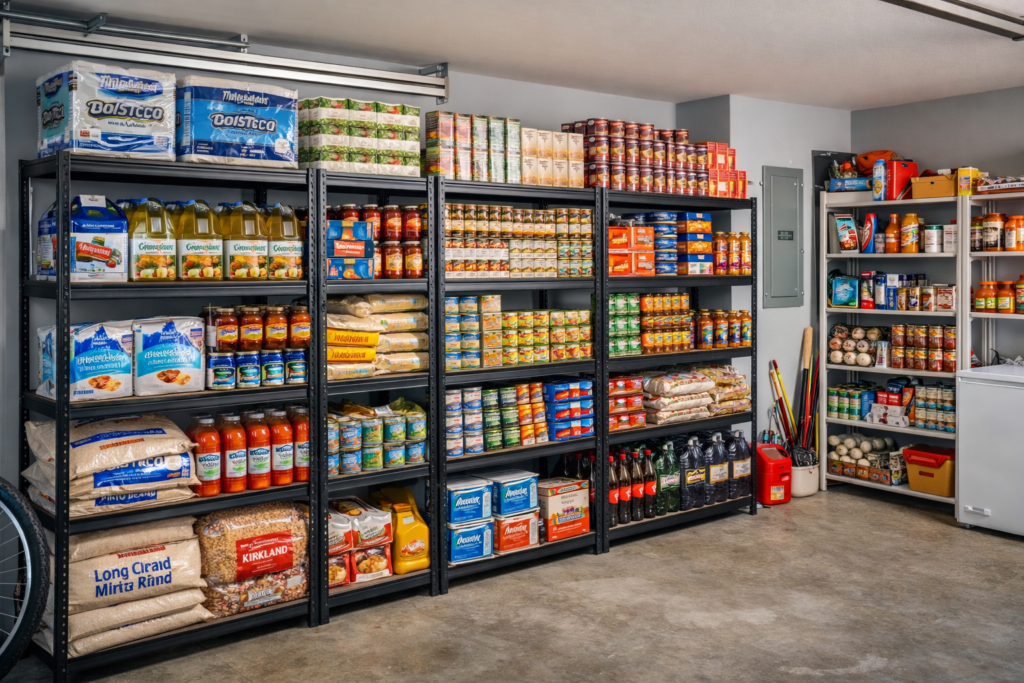
The key is balance. You’re not building a bunker—you’re building a buffer.
Step 1: Start with 2–4 Weeks
Focus on foods you already eat. Build a small reserve.
Step 2: Expand to 2–3 Months
Add bulk staples, frozen items, and household goods.
Step 3: Maintain and Rotate
Use older items first and replace them during regular shopping trips.
This approach avoids waste and keeps your supply fresh.
Common Mistakes to Avoid
- Overbuying unfamiliar foods
If you don’t eat it now, you won’t eat it later. - Ignoring storage needs
Dry goods need airtight containers; frozen goods need organization. - Focusing on luxury items
Stick to essentials with consistent use. - Letting food expire
Rotation is just as important as stocking.
The Bigger Picture: Financial Resilience
Bulk buying isn’t just about food—it’s about control.
In uncertain times, families who plan ahead:
- Feel less financial stress
- Avoid price shocks
- Make fewer emergency purchases
- Maintain consistent meal quality
It’s a quiet but powerful shift from reacting to prices… to staying ahead of them.
Final Thoughts
You don’t need to predict global events to prepare for their effects. Rising costs are already here—and likely to continue.
By using Costco strategically and focusing on bulk essentials, families can create a simple but effective safeguard:
A pantry and freezer that protect both your meals and your budget.
Start small, stay consistent, and build a system that works for your household. Over time, those small decisions can add up to meaningful savings—and peace of mind.