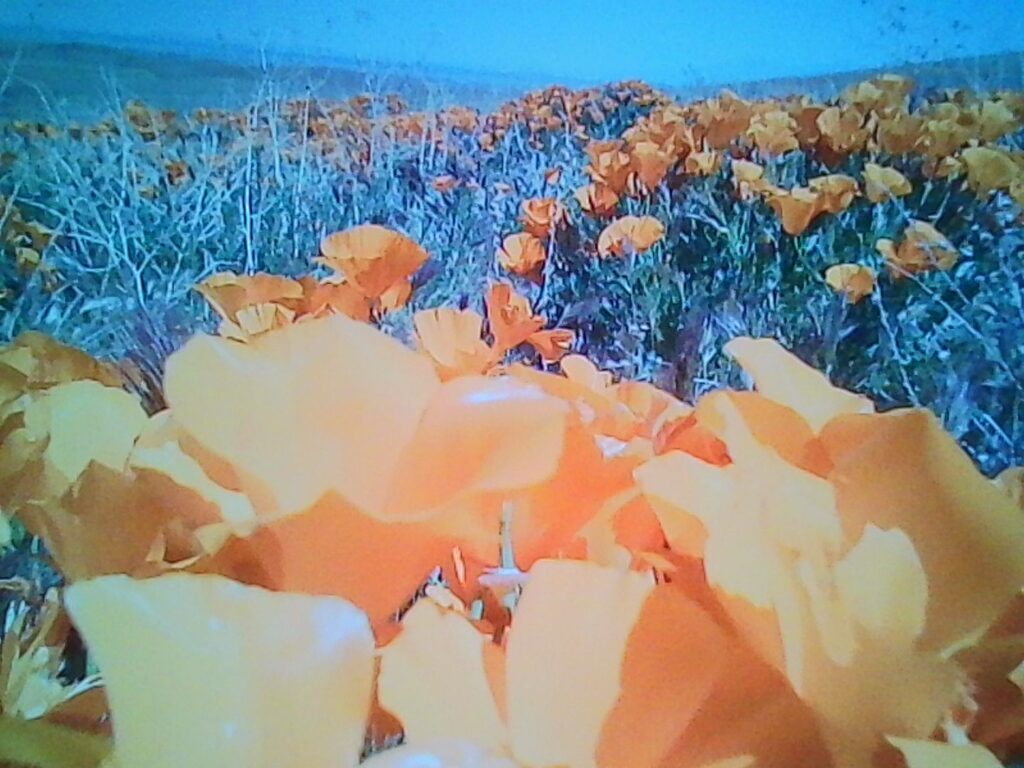
There are certain places that only reveal themselves for a short while each year. The Antelope Valley poppy fields are one of them. For most of the year, the land stretches dry and quiet beneath the California sky — open, windswept, and understated. But when spring arrives and conditions align just right, the hills awaken in orange. Just remember to remind the little ones to respect the flowers at a distance.
We visited the poppy fields as a family, not chasing spectacle, but curious to see what a landscape looks like when it briefly decides to bloom all at once.
A Desert That Waits
Antelope Valley doesn’t announce itself dramatically. The road there feels open and expansive, with long stretches of horizon and wind moving steadily across the land. You don’t expect color in that environment. The desert palette is usually muted — tans, browns, pale greens clinging close to the earth.
And then you crest a hill and see it.
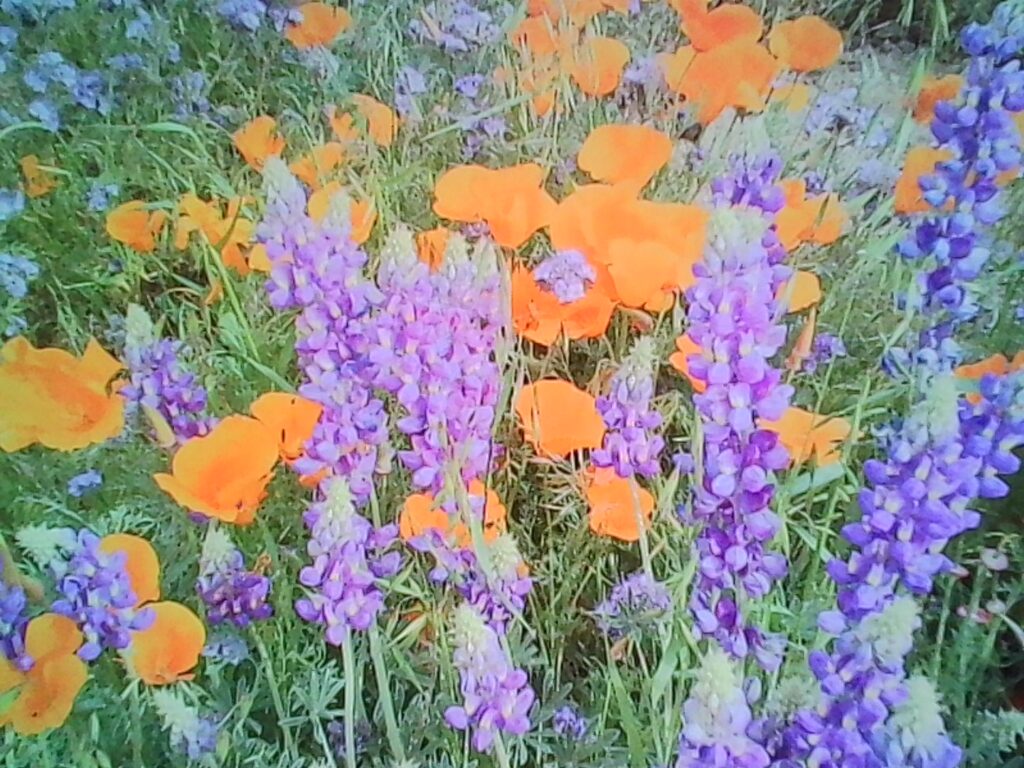
Fields brushed in orange, not perfectly uniform, but scattered and flowing like fabric laid gently across the ground. The poppies don’t stand tall and rigid. They sway. They bend with the wind. They close when the sun softens. They are delicate in a place that feels otherwise severe.
It’s humbling to see something so vibrant growing from terrain that looks so restrained most of the year.
Timing Is Everything
The bloom is never guaranteed. It depends on rain, temperature, and timing. Some years are brighter than others. Some hills glow more intensely. There’s something powerful about that unpredictability.
The poppies don’t bloom on command. They don’t perform for visitors. They respond only to the quiet mathematics of nature — moisture, sunlight, and patience.
Standing there, you realize how little control we have over moments like this. The bloom happens whether we arrive or not. And that makes being present for it feel like a privilege rather than an entitlement.
Seeing It Through Family
Visiting the poppy fields with family shifts the experience in subtle ways. Children don’t see fragility first — they see color. They see motion. They see something bright enough to draw them forward.
Walking carefully along designated paths, explaining why the flowers mustn’t be stepped on, becomes part of the lesson. Beauty requires respect. Nature doesn’t belong to us just because we can access it.
There’s something grounding about watching your family move quietly through a place that demands softness. Voices lower naturally. Steps become deliberate. The wind becomes part of the experience rather than a distraction.
The Wind and the Light
The wind in Antelope Valley rarely stops. It sweeps across the hills, lifting the petals into constant motion. Photographs never quite capture that movement fully. In still images, the fields appear calm. But in person, the landscape is alive.
Sunlight intensifies the color during midday. The orange almost vibrates against the blue sky. Yet as clouds drift in or the afternoon softens, the flowers seem to settle. They close gradually, conserving themselves.
It’s a reminder that even something as visually dramatic as a full bloom has its own rhythm. It opens and retreats on its own schedule.
Smallness in Open Space
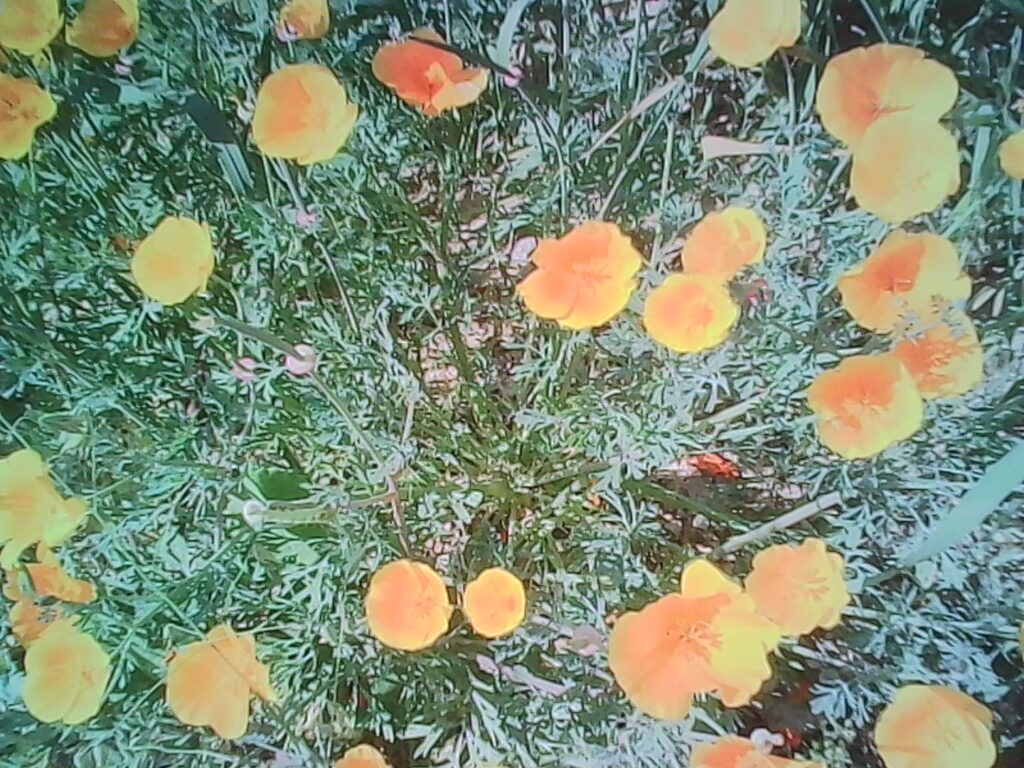
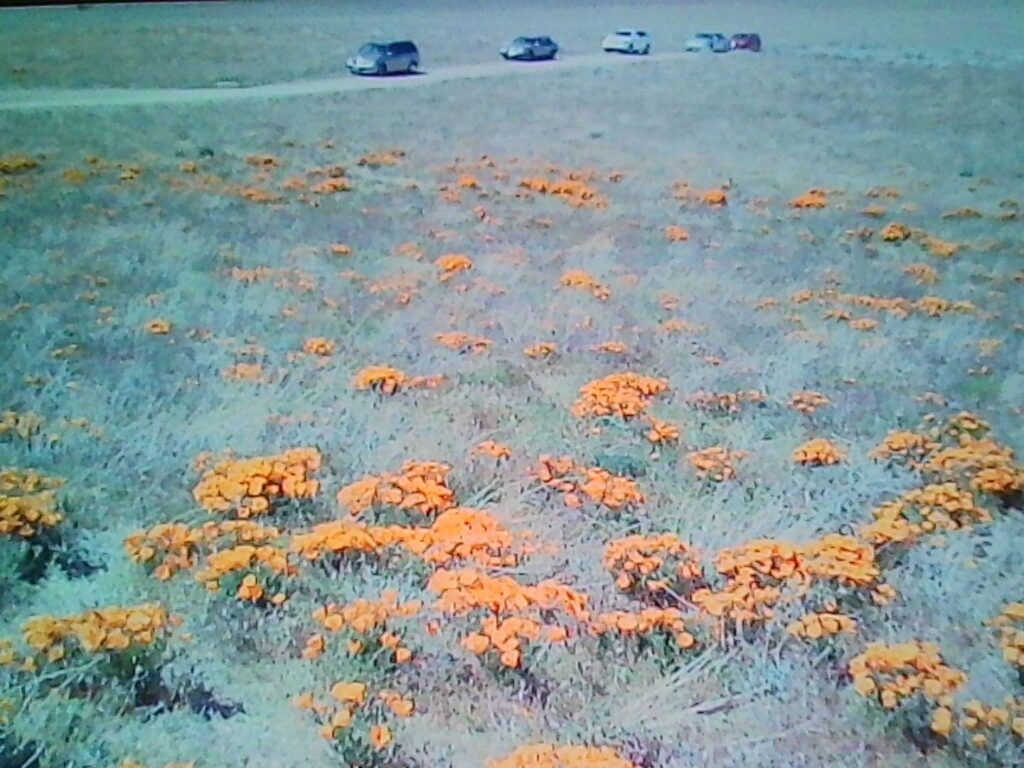
What struck me most was the scale of the openness around the flowers. The fields feel vast, but they are surrounded by even larger skies. The desert stretches beyond the bloom in every direction.
Standing there, you feel small — not insignificant, but properly placed. The land existed long before these flowers, and it will remain long after they fade. The bloom is temporary, but the desert is patient.
That contrast makes the moment feel layered. You’re witnessing something fleeting in a place defined by endurance.
A Seasonal Reminder
The poppies don’t last long. A strong wind, a shift in temperature, or the natural cycle of the plant will quietly bring the season to a close. The hills will return to their muted tones, and only memory will hold the orange.
That brevity is what makes the visit meaningful.
It reminds us that beauty isn’t meant to be permanent. It’s meant to be noticed.
The Road Back
Driving away from Antelope Valley, the orange recedes into the rearview mirror. The open road stretches again, the hills flattening into distance. There’s something peaceful about that transition.
You carry the color with you. You carry the wind, the careful steps, the shared silence. The poppies remain rooted in the desert, but the experience travels home.
Family trips like this don’t require elaborate plans. Sometimes, they’re simply about witnessing something together — standing side by side in a field that exists only briefly each year.
Carried Forward
As I get older, these seasonal outings feel more important. Not because they are dramatic, but because they are shared. Time moves quietly. Children grow. Parents age. The bloom returns each year in some form, but the people standing beside you change.
The poppies remind me that presence matters. That timing matters. That gathering in open space, even for an afternoon, can recalibrate something inside you.
The Antelope Valley poppy fields aren’t just about color. They’re about alignment — between rain and sun, between land and season, between family and moment.
And for a few weeks each spring, the desert chooses to show what patience can create.
Among the poppies, you remember that not everything in life needs to last forever to matter.
Some things are meant to bloom, sway in the wind, and quietly teach us to look closer.